
Is E20 Safe for Your Vehicles – Here is What Industry Leaders Admit

is e20 safe for your vehicles

The automotive industry in India is currently undergoing a massive transformation. With the government pushing towards cleaner fuels and eco-friendly policies, ethanol-blended fuel has become a major topic of discussion.

Among these, the introduction of E20 fuel—a blend of 20% ethanol and 80% petrol—has stirred conversations across consumers, manufacturers, and policymakers alike.

Many vehicle owners are asking: Is E20 safe for your vehicles?

To address this, we take a closer look with TazaJunction.com at what industry leaders and experts have said about the use of E20, its potential benefits, and the challenges it poses.


Understanding E20 Fuel

Before answering the critical question—Is E20 safe for your vehicles—it is essential to understand what E20 fuel actually is. Ethanol is a renewable fuel derived mainly from sugarcane, corn, or other biomass sources.

Blending it with petrol reduces dependency on fossil fuels, cuts down carbon emissions, and supports farmers by creating a new revenue stream.

Currently, India uses E10 (10% ethanol blend), but the government has set a target to achieve E20 blending nationwide by 2025–26. This target has made it necessary for the industry to evaluate how well vehicles can adapt to higher ethanol content.


The Promise of Cleaner Fuel

Proponents of ethanol blending highlight environmental and economic benefits. They argue that higher ethanol use will:

  • Reduce India’s crude oil import bill.
  • Lower carbon emissions, aligning with the country’s sustainability goals.
  • Support domestic farmers through increased demand for sugarcane and other ethanol-producing crops.

From this perspective, Is E20 safe for your vehicles isn’t just a consumer question but a national policy priority. However, transitioning to E20 comes with technical and safety concerns.


Industry Leaders Weigh In

Is E20 Safe for Your Vehicles

Automotive companies, fuel suppliers, and policymakers have all voiced opinions on the adoption of E20. Let’s look at what they admit.

1. Automakers’ Perspective

Car manufacturers like Maruti Suzuki, Hyundai, and Honda have acknowledged that not all vehicles on the road are ready for E20. While new models are increasingly being designed to handle ethanol-blended fuel, older vehicles may face issues such as:

  • Corrosion of fuel system components.
  • Reduced engine efficiency.
  • Increased maintenance requirements.

Automakers suggest that E20-compatible vehicles will gradually phase into the market, but they also caution owners of older vehicles to check with manufacturers before switching. This directly ties to the question: Is E20 safe for your vehicles if they were manufactured years ago?

2. Oil Marketing Companies

Fuel providers like Indian Oil and Bharat Petroleum admit that distribution infrastructure is being upgraded for E20. However, they also acknowledge challenges with storage and handling, since ethanol attracts water and can lead to contamination if not managed properly.

3. Government and Policymakers

The Ministry of Petroleum and Natural Gas strongly supports ethanol blending. According to the government, E20 is a crucial step towards “Atmanirbhar Bharat” (self-reliant India). But even they recognize that adoption requires consumer awareness, manufacturer readiness, and robust fuel infrastructure.


Impact on Different Types of Vehicles

The key issue behind Is E20 safe for your vehicles depends on what type of vehicle you drive.

  • Two-Wheelers: Most modern two-wheelers manufactured after 2022 are designed to handle E20. However, older models may face issues with carburetors and rubber seals.
  • Cars: Newer cars, especially those launched in the past two years, are increasingly E20-compliant. For older cars, compatibility depends on the manufacturer’s design specifications.
  • Commercial Vehicles: Trucks and buses will need significant upgrades since their engines are more sensitive to ethanol blends.
  • Luxury Vehicles: Many premium cars imported into India are optimized for fuels used in Europe or the U.S. Compatibility with E20 may vary widely.

Consumer Concerns

Even as the government promotes ethanol blending, consumers worry about mileage and performance. A recurring question is: Is E20 safe for your vehicles when it comes to efficiency?

Studies indicate that ethanol has a lower energy density than petrol. This means vehicles running on E20 could see a slight reduction in fuel economy—estimates suggest a 6–7% drop in mileage.

Maintenance costs also concern vehicle owners. Ethanol can corrode rubber, plastic, and some metal parts. Unless vehicles are designed with ethanol-resistant materials, the long-term durability of engines could be at risk.


Industry Solutions

Automakers and suppliers are not ignoring these concerns. Steps being taken include:

  • Upgraded Materials: Vehicles are being designed with ethanol-resistant fuel lines, tanks, and seals.
  • Software Calibration: Engine control units (ECUs) are being optimized to manage ethanol blends better.
  • Consumer Guidelines: Manufacturers are publishing advisories so that owners can check compatibility.

Industry leaders admit that while challenges exist, solutions are being actively implemented. Therefore, the answer to Is E20 safe for your vehicles depends largely on whether your vehicle is updated to meet these changes.


Long-Term Benefits of E20

image 17

Despite the current challenges, the move towards E20 brings undeniable benefits.

  1. Environmental Impact: Ethanol blending reduces greenhouse gas emissions, making transportation greener.
  2. Energy Security: India imports 80% of its crude oil needs. E20 will reduce dependency on volatile global oil markets.
  3. Agricultural Boost: Farmers stand to gain as ethanol demand increases crop utilization.

These benefits highlight why the government and industry are working hard to ensure that Is E20 safe for your vehicles is not just a question, but an achievable reality.


What Consumers Should Do

If you are concerned about whether E20 is safe for your vehicles, here are steps you can take:

  • Check with Your Manufacturer: Verify if your vehicle is certified for E20.
  • Look for Fuel Labels: Petrol pumps dispensing E20 will be labeled clearly.
  • Maintain Regular Service: Stay ahead of potential issues by following your vehicle’s maintenance schedule.
  • Consider Upgrading: If your car or bike is older, you may want to upgrade to an E20-compatible model in the coming years.

Conclusion

The debate around ethanol-blended fuel is both exciting and complex. As India gears up for a cleaner and more self-reliant future, the rollout of E20 is inevitable.

But the big question—Is E20 safe for your vehicles—does not have a simple yes or no answer. It depends on the make, model, and year of your vehicle, as well as how well manufacturers and fuel providers manage the transition.

Industry leaders admit that while challenges like engine wear, corrosion, and mileage reduction exist, technological solutions are being introduced to make E20 adoption smoother.

The transition may not be flawless, but with consumer awareness, manufacturer innovation, and government support, E20 can be a turning point in India’s journey toward sustainable mobility.

So the next time someone asks, Is E20 safe for your vehicles, the honest answer is: it can be—provided your vehicle is designed or upgraded to handle it.


Fortnite Delays Highly Anticipated Feature for the Third Time

fortnite delays highly anticipated feature

Few games in modern history have maintained cultural relevance quite like Fortnite. Since its explosive launch, the battle royale phenomenon has consistently evolved with new updates, crossovers, and game-changing features.

However, not all updates arrive smoothly. Recently, news broke that Fortnite Delays Highly Anticipated Feature yet again — marking the third time this long-promised addition has been pushed back.

The announcement left fans frustrated, sparking heated debates across social media platforms and raising questions about Epic Games’ development process.

With expectations higher than ever, this third delay has become one of the most controversial setbacks in Fortnite’s history.


The Feature Everyone Is Waiting For

So what exactly is the feature at the center of all this controversy? While Epic Games has not fully detailed every aspect, insiders and teasers point to a groundbreaking system that could transform Fortnite gameplay.

Rumors suggest it involves deeper customization options, new mechanics tied to player creativity, or an expansion of existing competitive modes.

Regardless of the details, the buzz around it has been enormous. Each time an update hinted at its arrival, anticipation skyrocketed. Yet, as of now, the story remains the same: Fortnite Delays Highly Anticipated Feature once again, leaving players wondering if it will ever truly arrive.


A Timeline of Delays

The frustration stems not just from one delay, but from a pattern that has repeated over months.

  1. First Delay – The feature was originally scheduled for release during a major seasonal update. Epic Games announced a short postponement, citing the need for “final polish and optimization.”
  2. Second Delay – Players hoped the next patch would finally deliver. Instead, Epic revealed that technical challenges forced another pushback. Optimistic fans were disappointed, but many remained understanding.
  3. Third Delay – Now, with the latest announcement, Fortnite Delays Highly Anticipated Feature for a third time. This time, the tone among fans is far less forgiving, with some calling the delay unacceptable.

Three delays have shifted fan sentiment from excitement to skepticism. For many, the repeated promises without delivery feel like broken trust.


Community Backlash

Fortnite Delays Highly Anticipated Feature

The third delay has ignited a storm of criticism across Twitter, Reddit, and YouTube. Memes mocking Epic Games’ development cycle are trending, with players comparing the situation to other infamous gaming delays.

On Reddit, one frustrated user wrote:

“We’ve been teased for months. At this point, I don’t even care if it’s perfect. Just give us something.”

Another popular tweet sarcastically claimed:

“Breaking News: Fortnite Delays Highly Anticipated Feature for the 50th time. Coming soon in 2030.”

These reactions highlight a growing divide between the developers and their community. While fans recognize that delays often improve quality, repeated postponements without clear communication leave many feeling left in the dark.


Why Epic Games Keeps Delaying?

Delays in game development are nothing new. In fact, they are often a sign that developers are prioritizing polish over rushing a flawed product.

In the case of Fortnite Delays Highly Anticipated Feature, Epic has cited technical hurdles, balance issues, and the need to ensure server stability.

Fortnite is a live-service game with millions of active players worldwide. Launching a broken feature could cause widespread frustration, server crashes, or even impact competitive integrity. From a development perspective, waiting until the feature is fully ready is the safer path.

Still, the lack of transparency fuels anger. Without detailed explanations, players feel that Epic is stringing them along rather than being upfront about the challenges.


The Risks of Overpromising

The controversy also highlights a broader issue in modern game development: the dangers of overpromising. When Fortnite Delays Highly Anticipated Feature for the third time, it exposes how announcing content too early can backfire.

Teasing features before they are ready builds massive hype, but it also creates massive pressure. Every delay chips away at player trust. In an industry where player patience is thin and competition is fierce, overpromising can hurt even the biggest franchises.


Lessons from Past Delays

image 193

Fortnite is not the first game to suffer backlash from delays. Titles like Cyberpunk 2077, Halo Infinite, and No Man’s Sky all faced criticism when promised features were delayed or underdelivered. However, these games also show that redemption is possible.

If Epic eventually releases the feature in a polished, groundbreaking form, fans may forgive the frustration. The key is ensuring that when it finally arrives, it lives up to — or exceeds — the years of hype.


The Impact on Competitive Play

One reason this delay stings so much is its potential impact on competitive players. Fortnite’s esports scene is massive, with tournaments offering millions in prize money. Many believe the anticipated feature could reshape strategies, team compositions, or even tournament formats.

By delaying it repeatedly, Epic inadvertently leaves professional players in limbo, unsure of how to prepare for future competitions. This adds another layer of frustration for one of Fortnite’s most dedicated communities.


Fan Theories and Speculation

In the absence of clear answers, fans have filled the void with speculation. Some believe that the feature involves an entirely new gameplay mode, similar to when Fortnite introduced Zero Build. Others think it may be related to player housing or map editing tools.

Regardless of the theories, the fact remains: Fortnite Delays Highly Anticipated Feature yet again, and no one outside Epic knows the full picture. This secrecy only intensifies curiosity — but also fuels cynicism.


What Epic Could Do Better?

While development setbacks happen, Epic could take steps to ease player frustration. Transparency would go a long way. Instead of vague promises, the company could provide regular updates about progress and challenges.

Additionally, offering smaller interim features or compensations — such as free cosmetics, bonus XP, or limited-time events — might soften the blow when delays occur. The key is showing that Epic values its community’s patience.


The Bigger Picture for Fortnite

Despite the controversy, Fortnite remains one of the most successful live-service games ever. Each season brings millions of players back, and crossovers with popular franchises keep the game relevant.

Still, if Fortnite Delays Highly Anticipated Feature continues, Epic risks damaging its reputation for delivering innovative, timely updates.

Live-service games thrive on trust. Players must believe that when developers promise something, they will deliver. Repeated delays threaten that trust, and if unchecked, they could push players toward competing titles.


Final Thoughts

The announcement that Fortnite Delays Highly Anticipated Feature for the third time is more than just another delay — it’s a test of patience for one of the world’s most dedicated gaming communities. Fans have waited months, endured teasers, and trusted Epic’s promises, only to be met with another setback.

While delays are often necessary for quality assurance, communication is key. Epic must recognize that transparency and honesty will go further than vague reassurances. For fans, the hope remains that when this feature finally launches, it will be worth every delay.

Until then, the phrase “Fortnite Delays Highly Anticipated Feature” will continue to echo across gaming forums, a reminder that even giants like Epic Games can stumble when they fail to balance ambition with execution.

Inside Hyundai Smart Factory: AI, EVs & the Future of Manufacturing

hyundai smart factory

In recent years, the automotive industry has witnessed one of the most remarkable transformations in its history.

At the center of this revolution is the Hyundai smart factory, a groundbreaking approach to manufacturing that blends artificial intelligence (AI), electric vehicle (EV) innovation, automation, and sustainable practices.

By embracing digitalization, Hyundai aims not only to redefine how cars are made but also to set new benchmarks for efficiency, safety, and environmental responsibility.

This TazaJunction.com article takes you deep inside the Hyundai smart factory, exploring its innovative technologies, its role in shaping EV production, and the wider implications for the future of global manufacturing.


The Vision Behind Hyundai’s Smart Factory

The concept of the Hyundai smart factory is rooted in the idea of Industry 4.0, where AI, robotics, big data, and machine learning drive production systems. Unlike traditional car plants, Hyundai’s new-age facility is designed to be fully digital, flexible, and sustainable.

The company envisions a future where cars are not just products but part of a connected mobility ecosystem. To achieve this, the Hyundai smart factory integrates predictive analytics, autonomous robots, and cloud-based systems to optimize every stage of production.

This vision is also tied to Hyundai’s long-term commitment to carbon neutrality, where clean manufacturing processes and renewable energy play a central role.


Role of AI in Revolutionizing Production

Artificial intelligence lies at the heart of the Hyundai smart factory. From quality control to predictive maintenance, AI ensures that the entire system operates smoothly and efficiently.

For instance, AI-powered sensors continuously monitor equipment and predict potential breakdowns before they occur. This predictive maintenance reduces downtime, saves costs, and improves safety.

Moreover, AI-driven quality checks detect even the smallest anomalies in car parts, ensuring that customers receive vehicles with unmatched reliability.

The Hyundai smart factory also uses AI algorithms to plan workflows, adjusting them dynamically depending on production needs, parts availability, and worker schedules.


EVs Take Center Stage

Hyundai Smart Factory

One of the primary reasons Hyundai invested heavily in its smart factory is the rise of electric vehicles. The global demand for EVs has surged, and manufacturing them requires a completely different setup compared to internal combustion engine cars.

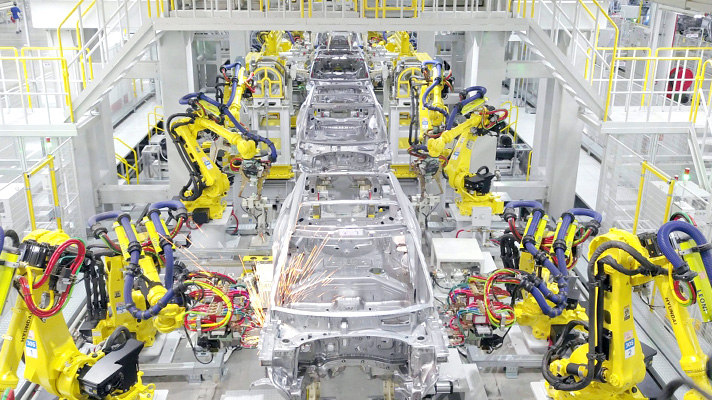
The Hyundai smart factory is specifically optimized for EV production. Automated guided vehicles (AGVs) transport heavy batteries safely across the plant, while robotic arms assemble components with precision. AI ensures that every battery pack undergoes rigorous quality checks before being integrated into the vehicle.

In addition, the facility is designed to adapt quickly to changing EV technologies. As battery chemistry and designs evolve, the factory’s modular system allows production lines to be reconfigured without long downtimes.


Human and Machine Collaboration

While automation and AI play dominant roles, the Hyundai smart factory doesn’t eliminate the need for human workers. Instead, it creates a collaborative environment where people and machines work together.

Workers are equipped with wearable devices that provide real-time instructions, safety alerts, and performance metrics. Collaborative robots, or “cobots,” assist humans in repetitive and physically demanding tasks, reducing fatigue and workplace injuries.

This human-machine synergy is one of the key factors that sets the Hyundai smart factory apart from traditional car plants.


Sustainability at the Core

Sustainability is another pillar of the Hyundai smart factory. The facility incorporates renewable energy sources like solar panels and wind power to reduce its carbon footprint.

Smart energy management systems monitor electricity usage in real time and automatically adjust operations to minimize waste. Water recycling systems and eco-friendly materials further ensure that the factory aligns with Hyundai’s global commitment to green manufacturing.

By embedding sustainability into its operations, the Hyundai smart factory sets a precedent for how future manufacturing hubs should operate in an environmentally conscious world.


Data as the New Fuel

Data is the lifeblood of the Hyundai smart factory. Every machine, robot, and process is connected through the Industrial Internet of Things (IIoT), creating a constant stream of information.

This data is analyzed in real time to make immediate adjustments. For example, if a machine detects a deviation in assembly, AI algorithms can instantly correct the process. Over time, this wealth of data builds predictive models that continuously improve efficiency.

By using big data and cloud computing, the Hyundai smart factory ensures scalability, meaning the lessons learned in one plant can be instantly shared with others around the globe.


The Global Impact of Hyundai Smart Factory

image 14

The innovations seen inside the Hyundai smart factory have far-reaching implications beyond the automotive industry. By pioneering a model of AI-driven, sustainable, and flexible production, Hyundai sets new global benchmarks.

Competitors in the automotive space are already taking note. The facility demonstrates that digitalization and sustainability can go hand in hand, providing a blueprint for other manufacturers to follow.

Moreover, the Hyundai smart factory shows how advanced technologies can boost economic growth, create high-tech jobs, and contribute to national strategies for industrial modernization.


Challenges Ahead

Despite its success, the Hyundai smart factory faces challenges. Cybersecurity risks are high in a fully connected environment, and protecting sensitive data is crucial.

Additionally, the integration of human workers with advanced machines requires extensive training and reskilling programs. Balancing automation with job creation remains a delicate task.

Finally, as EV demand continues to grow, the Hyundai smart factory must constantly innovate to stay ahead of evolving battery technologies and global competition.


The Future of Manufacturing

The story of the Hyundai smart factory is more than just a corporate success—it’s a glimpse into the future of manufacturing. Factories of tomorrow will rely on AI, automation, and sustainability to deliver products faster, cleaner, and smarter.

As Hyundai continues to refine its model, the automotive industry will likely see more companies adopting similar strategies. This evolution will not only reshape how cars are built but also redefine the very nature of industrial production.


Conclusion

The Hyundai smart factory represents a bold step forward in the journey toward Industry 4.0. By blending AI, EV-focused systems, automation, and sustainability, Hyundai has created a manufacturing hub that reflects the future of mobility.

From predictive maintenance and quality control to renewable energy and human-machine collaboration, every aspect of the factory embodies innovation.

While challenges remain, the Hyundai smart factory sets a powerful example for industries worldwide, showing how technology and sustainability can coexist to drive progress. In essence, Hyundai is not just building cars—it is building the future.

Pokemon TCG Live Free Illustration Rare Cards Giveaway Explained

pokemon tcg live free illustration rare cards

The Pokémon community has always thrived on surprises, exclusive rewards, and limited-time events. In a move that has excited fans worldwide, Pokemon TCG Live free Illustration Rare cards are now being distributed as part of a promotional campaign.

This initiative marks an important step in the evolution of the digital Pokemon Trading Card Game, as it not only encourages more players to engage with the platform but also rewards loyal fans who have consistently supported the franchise.

For both seasoned collectors and new players, the introduction of free Illustration Rare cards through Pokémon TCG Live is a chance to expand collections without heavy spending.

Let’s explore what this means, why it’s a big deal, and how the community is responding.


What Are Illustration Rare Cards?

Illustration Rare cards are a relatively new addition to the Pokémon Trading Card Game lineup. Unlike standard cards, these feature elaborate artwork with unique designs that go beyond the traditional card templates.

Often showcasing fan-favorite Pokémon in stunning, almost storybook-like illustrations, these cards hold significant collectible and gameplay value.

The decision to distribute Pokemon TCG Live free Illustration Rare cards directly impacts both collectors and competitive players.

Collectors view these cards as prized possessions, while competitive players enjoy adding visually appealing options to their decks. By offering them for free, Pokemon TCG Live is breaking barriers between casual players and dedicated fans.


Why Is Pokémon TCG Live Giving Out Free Cards?

Free Illustration Rare Cards

Pokmon TCG Live has faced its fair share of criticism since replacing Pokémon TCG Online. Issues such as bugs, missing features, and a less polished experience initially left some fans disappointed.

To rebuild goodwill and encourage more active participation, the developers have introduced promotions like the Pokemon TCG Live free Illustration Rare cards giveaway.

The free distribution also helps in three ways:

  1. Boosting Player Retention – Players who log in regularly are more likely to stay engaged if rewarded with exclusive cards.
  2. Encouraging New Players – Free rewards help new users start their digital collection without feeling overwhelmed.
  3. Bridging Gaps – By offering Illustration Rares at no cost, developers reduce the pay-to-win perception that sometimes surrounds trading card games.

How to Claim Pokemon TCG Live Free Illustration Rare Cards?

Claiming your free cards is simple, but it does require active participation. Players must log into their Pokémon TCG Live account during the promotional period and complete basic in-game tasks or daily challenges.

Here’s a breakdown of how it works:

  • Log In Daily: Some Illustration Rare cards are tied to login rewards.
  • Complete Challenges: Win matches or finish objectives to unlock special cards.
  • Event Rewards: Certain themed events in Pokémon TCG Live offer Pokemon TCG Live free Illustration Rare cards as a prize.

This straightforward system ensures that both casual and hardcore players can participate without feeling pressured.


Community Reaction to the Free Giveaway

image 12

The Pokémon community has responded with overwhelming positivity. Many fans see this as a long-overdue gesture after months of complaints about bugs and balancing issues.

Social media platforms and fan forums are full of players showing off their newly acquired Pokemon TCG Live free Illustration Rare cards, sharing screenshots of their collections, and encouraging others to log in before the promotion ends.

Interestingly, collectors outside the digital game are also keeping a close eye on these giveaways. While physical and digital markets are different, the popularity of Illustration Rares in TCG Live could influence future demand for physical sets featuring similar designs.


Impact on Competitive Play

One of the concerns raised about giving out free cards is how it might affect balance in competitive play. However, the developers have clarified that the Pokemon TCG Live free Illustration Rare cards are primarily cosmetic upgrades to existing cards rather than entirely new or overpowered ones.

This ensures that competitive fairness remains intact while still giving players a visually exciting reason to log in. That said, the addition of rare and appealing artwork can psychologically influence gameplay. Players often feel more motivated and confident when using beautiful cards, even if the stats remain identical.


A Marketing Strategy That Works

From a marketing perspective, the decision to offer Pokemon TCG Live free Illustration Rare cards is brilliant. It generates buzz, keeps the game trending on social platforms, and encourages both new downloads and returning players. Unlike traditional advertising campaigns, this strategy leverages the excitement of the Pokémon community itself.

Word-of-mouth promotion has always been one of the strongest tools in the Pokémon franchise, and this campaign fits right in. Players are far more likely to tell their friends about free rare cards than about a simple patch update or bug fix.


Could This Lead to More Freebies in the Future?

The success of this initiative raises the question: will Pokémon TCG Live continue offering free Illustration Rares or other rare cards in the future? While nothing is confirmed, developers have hinted at more community-driven events and seasonal giveaways.

If this trend continues, players could expect free promo packs, exclusive cosmetics, or even special edition cards tied to upcoming Pokémon anniversaries.

For now, though, the Pokemon TCG Live free Illustration Rare cards campaign stands as one of the most exciting developments in the digital card game’s history.


Challenges and Criticisms

Despite the overall positive reception, not everyone is satisfied. Some players argue that free rewards are a distraction from fixing more serious issues in Pokémon TCG Live, such as matchmaking bugs and technical glitches. Others worry that this might devalue Illustration Rare cards in the long run if too many are distributed freely.

However, most fans agree that the positives outweigh the negatives. The free giveaway has brought renewed attention to the game and softened some of the earlier backlash.


Why This Matters for the Future of Pokémon TCG?

The introduction of Pokemon TCG Live free Illustration Rare cards is more than just a one-time event—it reflects how digital card games are evolving.

Free rewards are becoming a standard way to keep players engaged in competitive online markets. Titles like Hearthstone and Magic: The Gathering Arena already use similar strategies, and Pokémon TCG Live is now following suit.

For Pokémon, this is particularly important because the franchise has one of the largest casual fanbases in the world. By making rare cards more accessible, the game ensures that players who might not normally spend money still feel included and valued.


Final Thoughts

The distribution of Pokemon TCG Live free Illustration Rare cards is a game-changer for both the platform and the community.

It rewards loyal players, attracts new ones, and keeps the conversation about Pokémon TCG Live alive. While not without criticisms, this initiative shows that the developers are paying attention to community feedback and looking for innovative ways to keep fans engaged.

Whether you’re a collector, a competitive player, or just someone who enjoys the thrill of opening new cards, this free giveaway is a must-claim opportunity.

With so much excitement already surrounding the campaign, one thing is certain: Pokémon TCG Live has found a winning formula to capture the hearts of its audience once again.

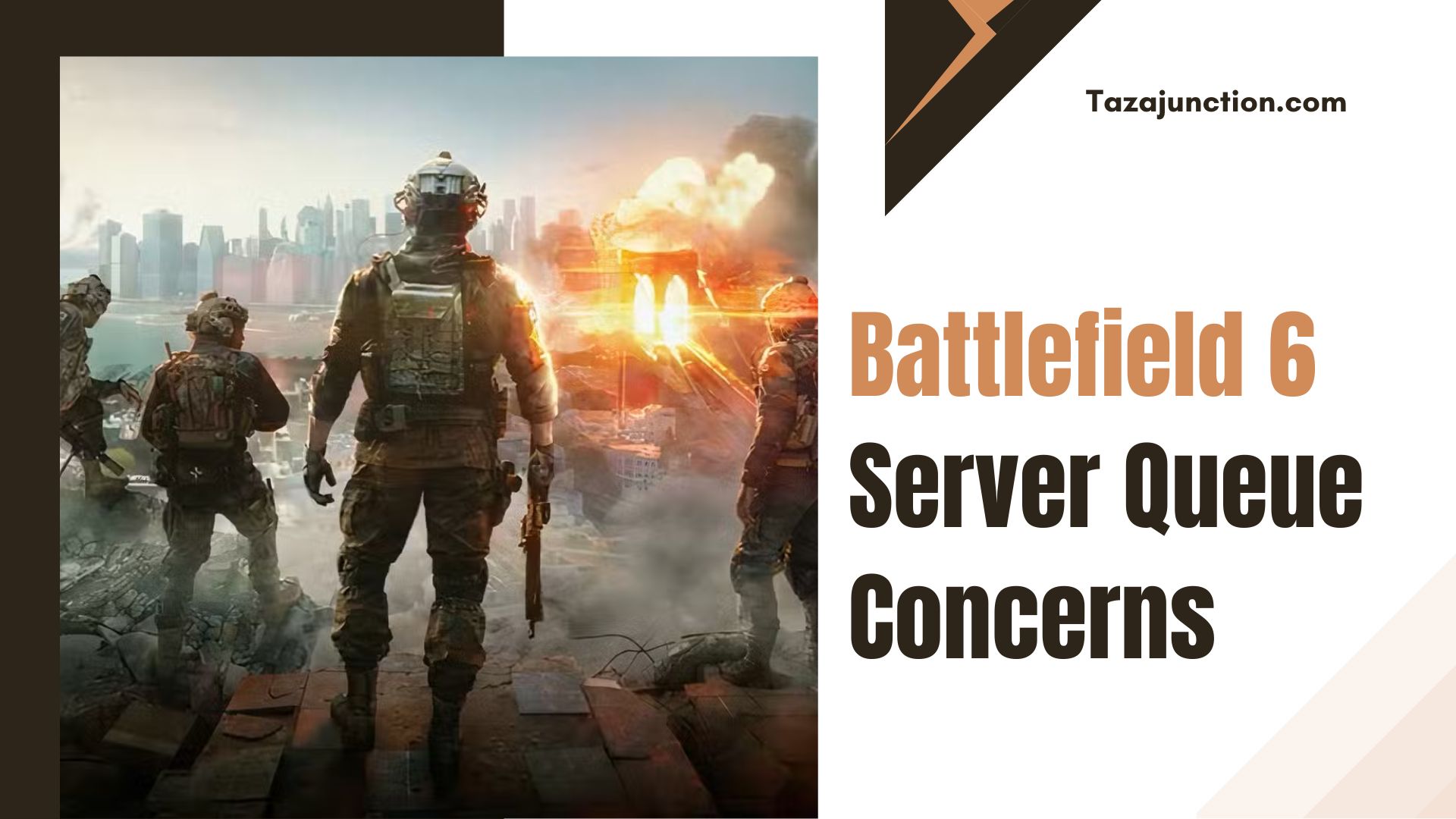
Battlefield 6 Addresses Server Queue Concerns

battlefield 6 addresses server queue concerns

The Battlefield franchise has always been one of the cornerstones of the first-person shooter (FPS) genre. With its massive battles, realistic destruction mechanics, and dynamic team-based gameplay, the series has cultivated a loyal fan base.

Now, with the upcoming release of Battlefield 6, players are buzzing with excitement. However, as anticipation builds, so does the discussion around one recurring issue in the franchise — server queues.

Battlefield 6 addresses server queue concerns in a way that could redefine the multiplayer experience for millions of gamers worldwide.

The History of Server Queue Issues in Battlefield

Server queues have been a thorn in the side of Battlefield players for years. From Battlefield 3 to Battlefield V, players have often complained about long wait times just to join a server.

These queues typically occur during peak gaming hours or immediately after a new update or expansion drops. The frustration intensifies when players wait for extended periods, only to have the game crash or encounter matchmaking errors.

With a franchise as popular as Battlefield, some level of queueing is expected. But over time, fans began demanding more robust solutions. That’s why the news that Battlefield 6 addresses server queue concerns has struck such a chord with the community.

Why Server Queues Are a Big Deal?

To outsiders, waiting in line to enter a server may not sound like a major issue. But in practice, it directly affects the core multiplayer experience.

Battlefield thrives on large-scale battles, where up to 128 players can fight across sprawling maps. When players are stuck in server queues, it disrupts the flow of the game and diminishes enthusiasm.

For competitive gamers, long queues can even discourage participation in ranked matches or tournaments. Casual players, meanwhile, may log off entirely if they can’t get into a game quickly.

This is why it matters that Battlefield 6 addresses server queue concerns, aiming to ensure smoother and faster access for everyone.

Developer Promises and New Infrastructure

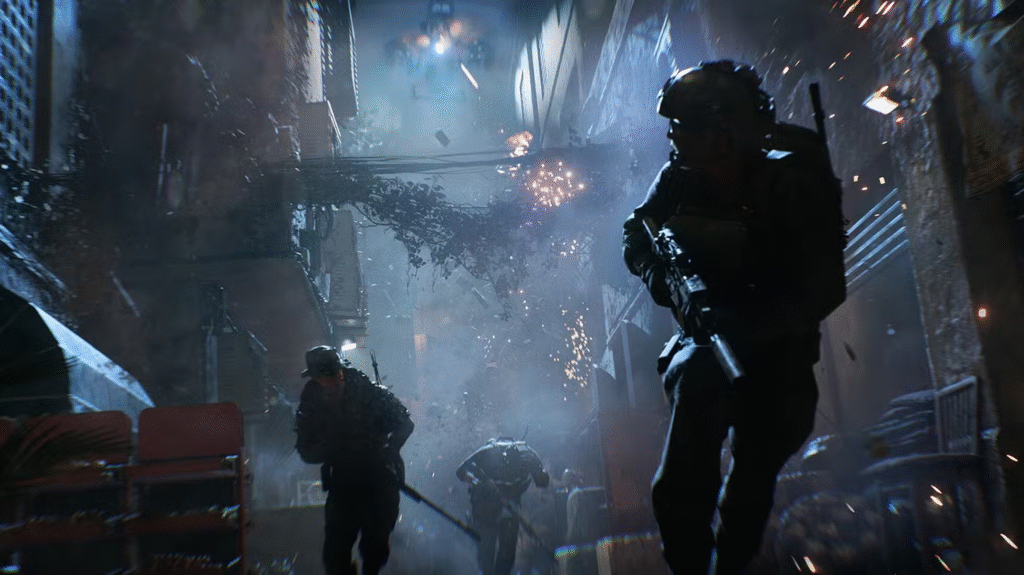
Battlefield 6 Addresses Server Queue Concerns

The development team at DICE has openly acknowledged that server queues were a weak point in previous Battlefield titles. In response, they have invested heavily in upgraded server infrastructure. Battlefield 6 will use advanced cloud-based servers with dynamic scaling, allowing the system to handle surges in player traffic more effectively.

According to insiders, this technology enables real-time allocation of server resources. For instance, if tens of thousands of players log in simultaneously after a patch, the system can automatically spin up new servers to reduce wait times.

This is one of the main ways Battlefield 6 addresses server queue concerns, providing a scalable solution that adapts to demand.

Dynamic Queue Management

Beyond infrastructure, DICE has also reworked how queues themselves are managed. Rather than forcing players to stare at a static screen, Battlefield 6 will allow gamers to engage with other parts of the game while waiting. This includes customizing loadouts, browsing in-game lore, or even practicing in a shooting range.

This “active queueing” approach transforms a frustrating downtime into a productive one. By letting players stay immersed in the game world, Battlefield 6 addresses server queue concerns while also improving overall engagement.

Player Feedback and Transparency

Another crucial change is the developers’ commitment to transparency. In previous games, players often had no idea how long they would be stuck waiting. Battlefield 6 will introduce estimated wait times and clear status updates on server availability.

This feedback-driven approach is part of DICE’s effort to rebuild trust with the community. By openly communicating about server health, Battlefield 6 addresses server queue concerns and reassures players that their frustrations are being heard and acted upon.

Potential Challenges Ahead

image 10

Of course, no system is perfect. Even with upgraded servers and smarter queueing systems, unexpected challenges may arise. Launch days are notoriously difficult for online games, and Battlefield 6 will almost certainly experience its fair share of stress tests.

Yet, the difference lies in preparation. The fact that Battlefield 6 addresses server queue concerns before launch shows a proactive stance. Instead of scrambling to fix problems after players complain, DICE is implementing safeguards from the start.

Community Reactions

The Battlefield community has responded positively to these announcements. Forums and social media are filled with cautious optimism, with many fans saying this is exactly the kind of improvement the franchise needs. Veterans who endured the painful queues of Battlefield 4 and Battlefield 1 are especially hopeful.

Still, some players remain skeptical. They argue that promises are easy to make, but only real-world testing will prove whether Battlefield 6 addresses server queue concerns effectively. Launch day performance will be the ultimate test of these claims.

The Bigger Picture for Online Gaming

The way Battlefield 6 addresses server queue concerns could have ripple effects beyond the franchise itself. Other large-scale multiplayer games face similar problems, from MMOs to battle royales. If DICE’s approach succeeds, it may set a new industry standard for managing player traffic.

By combining scalable infrastructure, dynamic queue systems, and transparent communication, Battlefield 6 could demonstrate that frustrating server queues don’t have to be the norm in online gaming.

Looking Toward the Future

Beyond just solving queues, these changes point to a broader shift in how developers approach multiplayer infrastructure. In an era where cloud technology, cross-platform play, and global matchmaking are becoming the standard, addressing server performance is no longer optional — it’s essential.

If Battlefield 6 succeeds in creating smoother server access, it will not only enhance player satisfaction but also strengthen the franchise’s reputation as a premier multiplayer shooter. For fans who have been with the series since the early 2000s, this is a long-awaited step forward.

Conclusion

In the end, the real question is not whether Battlefield 6 addresses server queue concerns, but how effectively it does so at launch and beyond.

With promises of scalable cloud infrastructure, smarter queue management, and greater transparency, DICE is showing that it has learned from past mistakes.

While challenges will undoubtedly arise, the proactive stance taken by the developers is a promising sign. For fans eagerly awaiting the next installment, knowing that Battlefield 6 addresses server queue concerns is a reassuring step toward a smoother, more enjoyable multiplayer experience.

Maruti Upcoming SUV: Can It Disrupt the Market for Hyundai Creta and Tata Nexon?

maruti upcoming suv

The Indian automobile market has witnessed explosive growth in the compact and mid-size SUV segments over the last decade. With rising consumer interest in stylish, feature-loaded, and fuel-efficient SUVs, carmakers are racing to capture a bigger share of this highly competitive segment.

Among the strongest contenders are Hyundai Creta and Tata Nexon, both of which have enjoyed massive popularity. However, the question now being asked is whether Maruti upcoming SUV: Can it disrupt the market for Hyundai Creta and Tata Nexon?

This burning question has intrigued automobile enthusiasts, potential car buyers, and market analysts alike. Maruti Suzuki, India’s largest car manufacturer, has a legacy of offering reliable, affordable, and fuel-efficient vehicles.

If the company manages to strike the right balance of innovation, affordability, and technology, its new SUV could shake up the dominance of existing market leaders.


Maruti Suzuki’s Legacy in the Indian Car Market

Before diving deeper into the possibilities, it’s important to acknowledge Maruti Suzuki stronghold over the Indian automobile market.

With iconic models such as the Alto, Swift, Baleno, and Brezza, Maruti has managed to capture the trust of Indian customers. The brand is synonymous with affordability, excellent after-sales service, and strong resale value.

The Brezza, in particular, is one of Maruti’s biggest success stories in the compact SUV category. While it competes with Tata Nexon and Hyundai Venue, it has consistently been a top-seller.

This gives rise to the speculation around Maruti upcoming SUV: Can it disrupt the market for Hyundai Creta and Tata Nexon?


Why Hyundai Creta and Tata Nexon Dominate Today?

Hyundai Creta and Tata Nexon have been dominant players for different reasons.

  • Hyundai Creta: Known for its premium appeal, advanced features, and multiple engine options, the Creta has set a benchmark in the mid-size SUV category. Its strong design language, modern interiors, and performance make it one of the most aspirational vehicles in India.
  • Tata Nexon: On the other hand, Tata Nexon stands out for its safety ratings, bold design, and wide range of variants, including the electric Nexon EV. Tata’s focus on safety and technology has made Nexon one of the top-selling compact SUVs in India.

The market success of these two models is proof that Indian buyers want more than just affordability—they want style, innovation, and cutting-edge features.

That’s why the focus has shifted to Maruti upcoming SUV: Can it disrupt the market for Hyundai Creta and Tata Nexon?


What We Know About Maruti Upcoming SUV?

Maruti Upcoming SUV

Though Maruti has not officially revealed every detail, industry leaks and reports suggest that the new SUV will be positioned in the highly competitive mid-size SUV segment, directly competing with Hyundai Creta, Kia Seltos, and Tata Nexon.

Some expected features include:

  • Bold and muscular design to appeal to young buyers
  • Advanced infotainment system with connected car technology
  • Strong emphasis on fuel efficiency, leveraging Maruti’s hybrid technology
  • Multiple engine options, possibly including a turbo-petrol variant
  • Competitive pricing, which has always been Maruti’s strength

These elements spark the discussion around Maruti upcoming SUV: Can it disrupt the market for Hyundai Creta and Tata Nexon?


The Pricing Advantage

Maruti has always managed to undercut competition by offering vehicles at more affordable price points without compromising too much on quality. Hyundai Creta is priced at a premium, while Tata Nexon falls somewhere in between.

If Maruti’s new SUV comes with a lower starting price yet offers comparable features, it could attract a large base of cost-conscious customers.


Maruti’s Hybrid and Fuel Efficiency Game

One of Maruti’s strongest advantages is its commitment to fuel efficiency. With rising fuel prices and stricter emission norms, customers now pay more attention to mileage and eco-friendliness. Rumors suggest that the new SUV could offer hybrid engine options, giving it a strong edge over its competitors.

While Hyundai and Tata are exploring electrification, Maruti’s hybrid focus could appeal to buyers who want fuel savings without worrying about EV charging infrastructure.

This is another critical point in the analysis of Maruti upcoming SUV: Can it disrupt the market for Hyundai Creta and Tata Nexon?


Consumer Loyalty and Brand Trust

Maruti Suzuki enjoys unmatched consumer trust in India. The company’s vast service network, availability of spare parts, and high resale value are factors that strongly influence purchase decisions. While Hyundai and Tata also have loyal customers, Maruti’s reach in smaller towns and rural markets is unmatched.

This loyalty could tilt the scales in favor of Maruti when customers consider Maruti upcoming SUV: Can it disrupt the market for Hyundai Creta and Tata Nexon?


Challenges Maruti May Face

Despite its advantages, Maruti’s new SUV may face some challenges:

  1. Feature Expectations: Modern buyers demand premium features like panoramic sunroofs, advanced driver assistance systems (ADAS), and connected tech. If Maruti cuts corners here, it could lose ground to Hyundai and Tata.
  2. Safety Concerns: Maruti cars have often faced criticism regarding their safety ratings. Tata Nexon has a 5-star Global NCAP rating, which is a huge selling point. Maruti will need to address this to stay competitive.
  3. Perception Battle: Hyundai Creta has a premium image while Tata Nexon is seen as a safe and futuristic choice. Maruti must carefully position its SUV to avoid being perceived as “basic.”

These challenges are vital in considering Maruti upcoming SUV: Can it disrupt the market for Hyundai Creta and Tata Nexon?


Expert Predictions

Automobile experts believe that Maruti’s entry into the mid-size SUV space will certainly shake things up. While Hyundai Creta’s loyal fan base may not immediately switch, Tata Nexon could face tougher competition given Maruti’s aggressive pricing strategy.

Still, the SUV market is growing rapidly, and there is enough space for multiple players. Even if Maruti doesn’t fully dethrone Hyundai Creta or Tata Nexon, its presence could redistribute market shares significantly.

This leads us back to the central theme: Maruti’s upcoming SUV: Can it disrupt the market for Hyundai Creta and Tata Nexon?


Final Thoughts

The SUV battle in India is about to get even more exciting. With Hyundai Creta’s premium positioning, Tata Nexon’s focus on safety and EV technology, and Maruti’s potential to blend affordability with innovation, the competition is heating up.

So, Maruti upcoming SUV: Can it disrupt the market for Hyundai Creta and Tata Nexon? The answer lies in how well Maruti balances features, safety, pricing, and innovation. If executed correctly, Maruti could once again dominate this segment just as it has done in others.

For now, car enthusiasts and potential buyers eagerly await the official launch to see whether Maruti’s newest SUV truly has what it takes to shake up the Indian SUV market.

Fans Call Out Metal Gear Solid Delta Collector’s Edition ‘Trash’ Quality

metal gear solid delta

Few franchises in gaming history have as much legacy as Metal Gear Solid. From Hideo Kojima’s groundbreaking storytelling to Konami’s iconic stealth-action gameplay, the series has left an indelible mark on players around the world.

So, when the remake Metal Gear Solid Δ: Snake Eater was announced, excitement spread like wildfire. Naturally, many fans rushed to secure the Metal Gear Solid Delta Collector’s Edition, hoping for a premium experience that would honor the series’ legacy.

But now that some fans have received their copies, a wave of disappointment is flooding social media. The highly anticipated Metal Gear Solid Delta Collector’s Edition is being criticized for its “trash” quality, sparking outrage, memes, and heated debates in the gaming community.

What was supposed to be a celebration of one of the greatest stealth titles ever has instead turned into a cautionary tale about overpromising and underdelivering.


The Hype Before Release

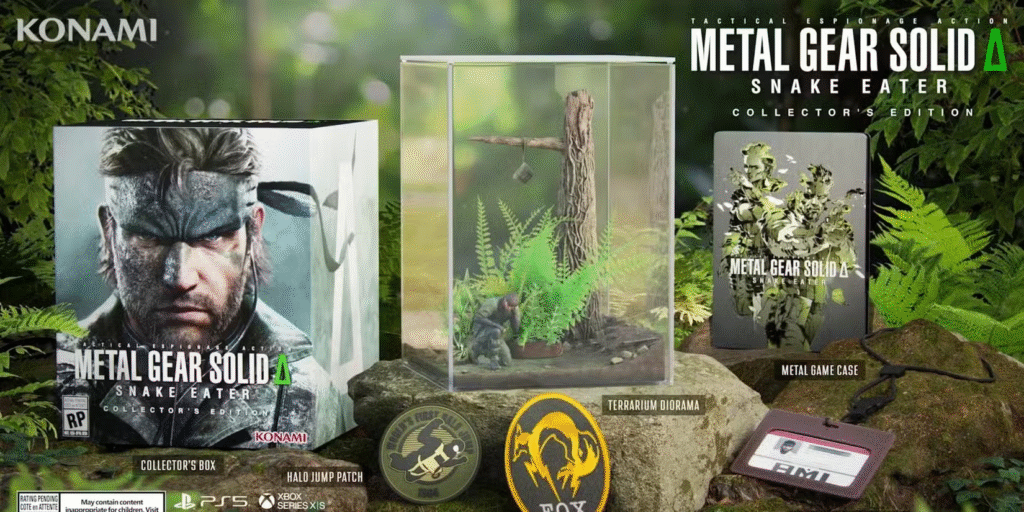
When Konami revealed the Metal Gear Solid Delta Collector’s Edition, the marketing leaned heavily on nostalgia and exclusivity. Promotional images showed a sleek package featuring collectible items such as:

  • A premium replica of Snake’s survival knife
  • An artbook with concept designs from the remake
  • A collector’s steelbook case
  • Exclusive digital bonuses
  • A special box designed to resemble classic Metal Gear aesthetics

For longtime fans, this package sounded like a dream come true. Many were willing to pay the hefty price tag because they expected quality materials and craftsmanship. After all, collector’s editions are meant to be treasured keepsakes — not just video games, but physical pieces of gaming history.


What Fans Actually Received?

Metal Gear Solid Delta

Unfortunately, once the Metal Gear Solid Delta Collector’s Edition began shipping, players quickly realized reality didn’t match the glossy advertisements. Photos and unboxing videos started popping up online, showing disappointing details such as:

  • The survival knife replica feeling more like a cheap plastic toy than a premium collectible
  • The artbook being far smaller and thinner than expected, with fewer pages than advertised
  • The steelbook case appearing flimsy and lacking the intricate design fans were promised
  • Packaging that felt rushed and low quality, with some users even reporting damaged boxes upon delivery

Instead of the luxurious, durable collector’s piece that fans had envisioned, many felt they had received a bargain-bin novelty set.


Outrage on Social Media

The backlash against the Metal Gear Solid Delta Collector’s Edition has been swift and brutal. On Reddit, Twitter, and gaming forums, fans have shared their disappointment using photos, sarcastic comments, and even memes comparing the edition to dollar-store toys.

One Reddit user wrote:

“I paid premium money for this, and what I got feels like something bundled with a budget title. Konami should be ashamed.”

Another gamer on Twitter posted a side-by-side comparison of the advertised knife versus the delivered one, calling it “the biggest scam in collector’s edition history.”

This widespread criticism shows just how much the community values authenticity and quality when it comes to beloved franchises.


Why This Feels Like a Betrayal?

The anger over the Metal Gear Solid Delta Collector’s Edition isn’t just about cheap materials. It’s about broken trust. For decades, Metal Gear Solid has been associated with attention to detail, from Kojima’s complex narratives to the iconic codec conversations that added depth to every mission.

When fans buy a collector’s edition, they expect that same attention to detail. They’re not just purchasing items — they’re investing in memories, nostalgia, and the legacy of the franchise. Delivering subpar collectibles feels like Konami is cashing in on fan loyalty rather than honoring it.


The Broader Problem with Collector’s Editions

The situation with the Metal Gear Solid Delta Collector’s Edition isn’t an isolated incident. Over the past decade, many collector’s editions across the gaming industry have been criticized for misleading advertisements, cheap build quality, or missing items.

Examples include:

  • Fallout 76 Power Armor Edition, where fans received a nylon bag instead of the advertised canvas bag.
  • Mass Effect Andromeda Collector’s Edition, which shipped with a plastic Nomad vehicle that fans called “a toy car.”

This growing trend has made players more cautious, and incidents like the one with Metal Gear Solid Delta only reinforce skepticism.


What Fans Expected vs. What They Got?

If we break down the core issues with the Metal Gear Solid Delta Collector’s Edition, the gap between expectation and reality becomes clear:

  • Knife Replica: Expected to be metal with realistic weight and detail; received lightweight plastic with poor craftsmanship.
  • Artbook: Expected hardcover, full of rare concept art; received a thin, small paperback with minimal content.
  • Steelbook: Expected premium, embossed artwork; received a generic-looking case lacking durability.
  • Packaging: Expected sturdy, display-worthy box; received fragile packaging prone to dents and scratches.

This mismatch explains why fans are using the word “trash” — not just to describe the physical quality, but to express the feeling of being duped.


Can Konami Recover from This?

image 191

The fallout from the Metal Gear Solid Delta Collector’s Edition fiasco could damage Konami’s already fragile relationship with its fanbase.

The company has long faced criticism for its handling of the franchise after parting ways with Hideo Kojima. For many players, this collector’s edition feels like another misstep in a series of disappointing decisions.

However, there are still ways Konami could attempt to repair the damage:

  1. Acknowledge the Problem: Silence will only worsen the outrage. A public statement addressing fan concerns would show accountability.
  2. Offer Compensation: Refunds, partial reimbursements, or digital bonuses could help soften the blow.
  3. Improve Future Products: Learning from this mistake and ensuring higher-quality collector’s editions in the future would restore some trust.

The Fans’ Perspective

It’s important to remember why emotions are running so high. Fans aren’t just angry customers; they’re passionate supporters of a legendary franchise. For many, Metal Gear Solid is more than just a game — it’s a formative experience that shaped their love for storytelling and stealth gameplay.

That’s why the disappointment over the Metal Gear Solid Delta Collector’s Edition cuts so deep. It feels like a betrayal of that shared history, a sign that the franchise’s legacy is being treated as a quick cash grab rather than a cherished piece of gaming culture.


Looking Forward

Despite the controversy, the remake of Metal Gear Solid Δ: Snake Eater itself still holds promise. Gameplay footage has shown impressive visuals and faithful recreations of classic mechanics. If the game delivers on its potential, it could help soften the blow of the collector’s edition backlash.

Still, the Metal Gear Solid Delta Collector’s Edition will serve as a reminder for both fans and companies: trust is fragile, and once broken, it takes more than glossy marketing to repair.


Final Thoughts

The gaming community’s reaction to the Metal Gear Solid Delta Collector’s Edition highlights an important truth: fans expect collector’s editions to be worthy of the franchises they represent. When companies cut corners or misrepresent their products, they risk not just negative reviews but long-term damage to their reputation.

For Konami, this controversy is a warning sign. If they truly want to rekindle the love that gamers once had for the Metal Gear series, they must show respect for the fans who have supported it for decades. Delivering subpar collectibles under the banner of nostalgia is not the way to do it.

As fans continue to voice their frustration, one thing is clear: collector’s editions should be treasures, not disappointments. And until companies learn that lesson, the phrase “trash quality” will keep echoing across the gaming world.

World of Warcraft Patch 11.2 Added a Secret Way to Skip Delves

world of warcraft patch 11.2

For nearly two decades, World of Warcraft has continued to surprise its players with creative twists, hidden secrets, and unexpected mechanics. With every expansion and update, Blizzard finds ways to keep the world of Azeroth alive and engaging.

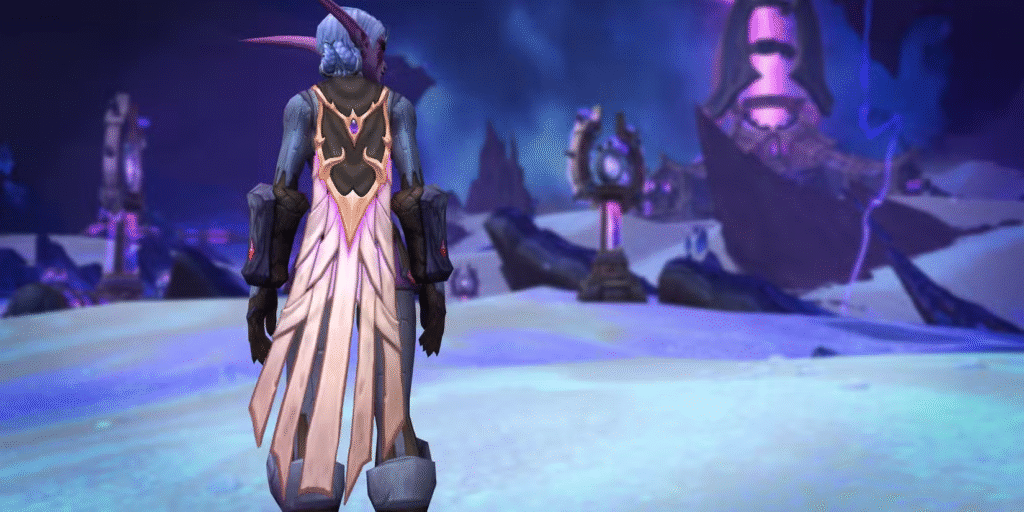
The latest update, World of Warcraft Patch 11.2, is no exception. While players expected new quests, balance changes, and quality-of-life improvements, they were shocked to discover a secret feature hidden deep in the game: the ability to skip Delves entirely under certain conditions.

This hidden mechanic is sparking excitement in the community, as it not only changes how players approach content but also opens up discussions about Blizzard’s design philosophy and the direction of the game.

In this TazaJunction.com article, we’ll explore what Delves are, how this skip mechanic works, why it was added, and what it means for the future of World of Warcraft.


What Are Delves in World of Warcraft?

Before diving into the new feature, it’s important to understand what Delves are. Introduced as part of the recent expansion, Delves are small, instanced adventures designed for solo players or small groups. They serve as quick, dungeon-like challenges that offer rewards such as gear, crafting materials, and achievements.

Delves were meant to provide a more casual, accessible option for players who might not have the time or coordination for full-scale dungeons and raids. They quickly became a fan-favorite, allowing adventurers to experience bite-sized content at their own pace.

However, while Delves are engaging, some players found them repetitive, especially when running them multiple times on different characters. That’s where the surprise in World of Warcraft Patch 11.2 comes in: Blizzard has quietly added a secret method to bypass them altogether.


The Secret Skip Mechanic

The hidden mechanic discovered in World of Warcraft Patch 11.2 allows players to completely skip a Delve under specific circumstances. While Blizzard hasn’t publicly documented this feature, the community quickly pieced together how it works.

If players meet certain progression requirements — such as completing Delves a set number of times, achieving reputation milestones, or obtaining a rare item — they can unlock a “skip option.” This option appears when entering the Delve, letting them bypass the adventure while still collecting baseline rewards.

This is a game-changer for players who value efficiency. Instead of grinding the same Delve repeatedly just to collect a weekly reward, they can move past it and focus on other areas of the game, such as raids, PvP, or world quests.


Why Add a Skip Option?

image 187

The addition of this secret feature in World of Warcraft Patch 11.2 has led to much speculation. Why would Blizzard add a skip option for content that was designed to be a core part of the expansion?

The answer lies in player feedback. While many enjoyed Delves initially, long-term players felt that repeatedly running them across multiple characters became a chore.

Blizzard appears to have listened, introducing a skip mechanic that respects players’ time while still encouraging them to engage with Delves at least once per character or account.

This balance keeps Delves relevant without making them a mandatory grind. It also shows Blizzard’s increasing focus on accessibility and quality-of-life improvements, values that have become especially important in modern MMOs.


How Players Can Unlock the Skip?

While Blizzard hasn’t published an official guide, players have already shared details on how to activate the skip in World of Warcraft Patch Generally, it requires one of the following:

  • Account-Wide Progression: Completing all available Delves once unlocks the option to skip them on alternate characters.
  • Special Token or Item: A rare consumable item, rewarded from a meta-achievement, grants permanent access to the skip option.
  • Reputation Milestone: Reaching exalted status with a new faction tied to the Delves may unlock account-wide skipping privileges.

The exact details may vary, but the overall theme is clear: players are rewarded for putting in the effort once, and then they can skip repetitive runs in the future.


Community Reactions

image 188

The reaction to World of Warcraft Patch 11.2 and its secret skip option has been overwhelmingly positive. Many players feel relieved that their time is respected, especially those who juggle multiple characters. Others appreciate that Blizzard didn’t remove Delves outright — they remain fully available for those who enjoy them.

Some players have even speculated that this feature could serve as a testing ground for future updates. If the skip mechanic proves successful, Blizzard might expand it to other forms of content, such as older dungeons, quest chains, or reputation grinds.


The Impact on Gameplay

The impact of this secret skip mechanic in World of Warcraft Patch 11.2 goes beyond just convenience. It changes how players approach progression and time management in the game. Here are some key effects:

  1. Alt-Friendly Gameplay: Skipping Delves makes leveling and gearing alternate characters much faster, encouraging players to explore more classes and roles.
  2. Efficiency in Weekly Goals: Players can complete their weekly objectives without feeling forced to repeat the same content endlessly.
  3. Focus on Preferred Content: With less time spent in repetitive instances, players can dedicate more hours to raiding, PvP, or role-playing communities.

In short, the feature gives players more freedom to choose how they want to engage with the game.


Why It Was Kept a Secret?

One of the most interesting aspects of World of Warcraft Patch 11.2 is that this skip option wasn’t mentioned in the patch notes. Why would Blizzard keep such a helpful feature under wraps?

There are a few possible reasons:

  • Encouraging Discovery: Blizzard has a long tradition of hiding secrets and easter eggs for players to uncover. Keeping the skip hidden adds a sense of mystery and excitement.
  • Testing Player Response: By not announcing it outright, Blizzard could observe organic community reactions before deciding whether to expand or refine the mechanic.
  • Maintaining Delve Relevance: If players knew about the skip from day one, they might never experience Delves. Keeping it secret ensures most players engage with them at least once.

What This Means for the Future of WoW

The hidden skip mechanic in World of Warcraft Patch 11.2 could set a precedent for future updates. As the MMO landscape evolves, time-saving features and alt-friendly systems are becoming increasingly important.

Blizzard’s willingness to implement such features — even secretly — suggests they are open to experimenting with new ways to improve player satisfaction. It’s possible that future patches will introduce more account-wide unlocks, skip mechanics for old raids, or shortcuts through lengthy questlines.

This design philosophy reflects the studio’s commitment to respecting players’ time, a crucial factor in an era when gamers are balancing busy schedules with their passion for Azeroth.


Final Thoughts

The discovery of a secret skip mechanic in World of Warcraft Patch 11.2 has injected fresh excitement into the community. By allowing players to bypass Delves under certain conditions, Blizzard has struck a balance between preserving engaging content and respecting player time.

This feature not only makes the game more alt-friendly but also highlights Blizzard’s ongoing efforts to adapt to the needs of modern players. Whether you love the thrill of conquering Delves or prefer focusing on raids and PvP, this update ensures that everyone can enjoy the game in their own way.

As the expansion continues to unfold, one thing is certain: World of Warcraft still has plenty of surprises left. And if World of Warcraft Patch 11.2 is any indication, the future of Azeroth is shaping up to be more player-friendly than ever.

New Steam Game Blends the Bloody Combat of Doom with Parkour Speedrunning

new steam game

The gaming industry thrives on innovation, and every once in a while, a title comes along that combines familiar elements in a way that feels both refreshing and electrifying.

A new Steam game has just arrived on the platform, and it’s turning heads for its daring blend of two seemingly different genres: the chaotic, blood-soaked combat reminiscent of Doom and the sleek, adrenaline-pumping movement of parkour speedrunning.

The result is a pulse-pounding experience that challenges players to not only survive brutal encounters but to move with finesse, creativity, and lightning speed.

In this TazaJunction.com article, we’ll dive into the mechanics, the inspirations behind this hybrid creation, and why it’s quickly becoming a must-play for fans of action shooters and speedrunning communities alike.


The Concept Behind the Game

At first glance, the new Steam game looks like another entry into the crowded first-person shooter (FPS) market. However, its unique gameplay loop sets it apart from the competition. Instead of simply focusing on firepower, it emphasizes momentum, agility, and fluidity of movement.

Players are encouraged to keep moving at all times, chaining together wall-runs, vaults, and aerial flips while simultaneously mowing down hordes of grotesque enemies.

The developers clearly took inspiration from Doom’s relentless pace and unflinching gore, but rather than keeping players confined to traditional arenas, they’ve opened up levels into sprawling vertical playgrounds. Every corridor, rooftop, and platform is a potential route to glory — or death — depending on the player’s skill.


Fast-Paced Combat Meets Fluid Movement

What makes this new Steam game especially addictive is how it seamlessly merges two demanding mechanics. On one hand, you’ve got a combat system that’s heavy, visceral, and impactful.

Weapons roar with explosive energy, enemies burst into showers of blood, and every shot carries weight. On the other hand, the parkour mechanics demand precision, timing, and mastery.

This balance creates a rhythm where slowing down is never an option. The longer you stay in motion, the higher your score multiplier climbs. Momentum itself becomes a resource — stop moving, and you risk not only losing points but also being overwhelmed by enemies. It’s this razor’s-edge design philosophy that sets the game apart and keeps players glued to the screen.


Inspirations from Doom and Mirror’s Edge

image 186

Gamers will instantly recognize the DNA of two major franchises within this Steam game. From Doom, it inherits the relentless enemy waves, heavy weaponry, and unapologetic gore. The combat feels raw, primal, and cathartic — the kind of gameplay that pumps adrenaline straight into your veins.

From Mirror’s Edge and the speedrunning community, it borrows fluid traversal mechanics. Sprinting across rooftops, leaping impossible gaps, and wall-running along industrial complexes feel natural and exhilarating.

The difference here is that unlike pure parkour games, you’re doing all this while being chased, shot at, and swarmed by monsters. The dual challenge of surviving and moving stylishly gives the game an identity all its own.


The Thrill of Speedrunning

One of the standout features of the new Steam game is how it caters directly to speedrunners. Every level is designed with multiple possible routes, hidden shortcuts, and clever environmental puzzles that reward exploration and mastery.

The leaderboard system adds a competitive edge, pushing players to shave milliseconds off their best times while maintaining their kill count.

This mechanic transforms the game from a straightforward shooter into a playground of experimentation. Players aren’t just trying to survive — they’re trying to craft the perfect run, balancing combat efficiency with movement artistry. It’s this sense of replayability that ensures the game won’t be forgotten any time soon.


Weapons and Arsenal

The new Steam game doesn’t skimp on firepower. Fans of traditional shooters will find plenty of destructive toys to wield. From shotguns that tear enemies in half at close range to plasma rifles that incinerate mobs in a blaze of energy, every weapon feels powerful and satisfying.

But what makes the arsenal even more engaging is how it integrates with movement. Some guns propel you forward with recoil, doubling as mobility tools.

Grenades can be used for explosive jumps, launching players to higher platforms. This design philosophy ensures that every weapon isn’t just about dealing damage but also about enhancing your traversal options.


Enemy Variety and Challenge

A game like this wouldn’t work without challenging enemies, and this new Steam game doesn’t disappoint. Players will face a diverse roster of grotesque monsters — fast, agile demons that chase you across walls, towering brutes that slam the ground and disrupt your momentum, and ranged attackers that force you to zigzag through a hail of projectiles.

The variety ensures that players can never rely on a single strategy. Sometimes speed is your best ally, while at other times, slowing down to carefully time a headshot is essential. The challenge is always evolving, demanding adaptability and creativity.


Level Design: Verticality and Creativity

Levels in the new Steam game are far from linear corridors. Instead, they’re sprawling, vertical sandboxes filled with platforms, climbable walls, and destructible elements. Verticality plays a massive role, with enemies lurking above and below, forcing players to constantly scan their environment.

Hidden collectibles encourage exploration, while alternate paths reward daring stunts and risky maneuvers. It’s this layered level design that makes the game equally thrilling for casual players and dedicated speedrunners alike.


Atmosphere and Visuals

Visually, the new Steam game is a spectacle. Neon-lit skylines clash with grim, blood-soaked arenas, creating a sharp aesthetic contrast. The art direction feels like a fusion of cyberpunk energy and hellish nightmare, a fitting backdrop for the chaos that unfolds.

The soundtrack is equally important — heavy metal riffs and electronic beats pound in the background, syncing perfectly with the rhythm of combat and movement. The combination of sound and visuals ensures an immersive, heart-racing experience.


Why This Game Stands Out?

The market for shooters is saturated, but this new Steam game carves out a niche by daring to be different. Instead of rehashing old formulas, it takes two genres that rarely intersect and merges them into something innovative.

For fans of Doom, it offers the blood-pumping action they crave. For parkour enthusiasts and speedrunners, it provides the freedom and creativity to push limits. For everyone else, it’s simply an electrifying ride that feels both familiar and entirely new.


The Future of Hybrid Gaming

The success of this new Steam game could signal a broader trend in the industry. As developers look for fresh ways to captivate audiences, hybrid genres like this may become more common.

By taking risks and merging mechanics from seemingly unrelated titles, studios can create experiences that surprise and excite players.

If the strong reception continues, this game could inspire a wave of similar titles that explore new ways to combine movement, combat, and competition. It’s a reminder that gaming’s greatest strength lies in its ability to innovate and evolve.


Final Thoughts

In the end, this new Steam game isn’t just another shooter or another parkour experiment. It’s a thrilling, blood-soaked rollercoaster that keeps players hooked with its relentless pace, creative mechanics, and competitive edge.

By blending the best of Doom’s brutal combat with the elegance of parkour speedrunning, it sets a new standard for what action games can achieve.

Whether you’re in it for the glory of the leaderboard, the catharsis of tearing monsters apart, or simply the thrill of flying across rooftops at breakneck speed, this title has something to offer.

For gamers seeking a fresh, heart-pounding experience, look no further. The new Steam game is here, and it’s redefining the boundaries of first-person action.

McDonald’s Reveals Plans to Crack Down on Pokemon Scalpers

pokemon scalpers

In recent years, the intersection of fast food and collectibles has become a hotbed for controversy, especially when it comes to limited-edition promotions.

One of the most talked-about issues is the rise of McDonald’s Pokemon scalpers, who have been exploiting promotional campaigns by purchasing bulk quantities of exclusive Pokémon-themed products. Now, McDonald’s is stepping up to address the problem head-on.

The fast food giant recently announced new measures aimed at curbing the scalping of Pokemon cards and merchandise during its popular promotional events.

The company’s initiative is in response to growing concerns from families, collectors, and even store employees who have witnessed firsthand the frenzy that these promotions create.

The effort marks a significant shift in McDonald’s marketing approach and speaks volumes about the influence of collectible culture in modern commerce.

Also, you can run through how this Pokemon Scarlet and Violet distribution event works and why it matters to both veterans and fresh players.


The Problem with McDonald’s Pokemon Promotions

McDonald’s has collaborated with The Pokémon Company multiple times over the past decade, offering exclusive Pokémon cards and toys as part of its Happy Meal promotions.

These campaigns have consistently drawn enormous attention—not only from children and fans of the franchise, but also from opportunists looking to profit off the limited-edition items.

In several past promotions, McDonald restaurants across multiple countries saw customers buying dozens—even hundreds—of Happy Meals just to get the included Pokémon cards.

This led to limited stock, disappointed customers, and significant food waste. The rise of McDonald’s Pokemon scalpers not only impacted genuine fans and families but also prompted backlash on social media and forums.

With Pokémon card values skyrocketing in online marketplaces, scalpers were quick to realize the opportunity. Some even began reselling individual cards or sealed Happy Meal packs at several times their original value.


McDonald’s Response: A Plan to Stop Scalping

image 184

Following repeated incidents and growing public pressure, McDonald’s has unveiled a multi-faceted strategy to deter McDonald’s Pokemon scalpers and preserve the integrity of future promotions.

1. Purchase Limits Per Customer

One of the first steps includes strict limits on how many Happy Meals or promotional items a single customer can buy per visit. This will be enforced at the point of sale, and franchisees are being given clear guidance on implementing the policy.

By capping purchases, McDonald’s aims to give every family a fair shot at obtaining the collectibles, rather than letting a few buyers hoard the entire stock.

2. Decoupling Cards from Meals

In select markets, McDonald’s has begun offering the Pokémon cards as standalone purchases rather than attaching them exclusively to Happy Meals.

This reduces unnecessary food waste and may help control bulk buying. The separation also allows for better stock tracking and enforcement of purchase limits. However, this model is still in the testing phase and has yet to be rolled out globally.

3. Online Reservation Systems

Some regions are experimenting with online reservations or ticketing systems. Customers can sign up in advance and secure a time slot to pick up their promotional packs.

This digital solution may be one of the most effective tools in limiting the influence of McDonald’s Pokemon scalpers, as it brings transparency and structure to the purchasing process.


The Role of Franchise Owners

McDonald’s operates thousands of independently owned franchises, which can create inconsistencies in how promotions are handled. In the past, some franchisees turned a blind eye to bulk purchases or scalping behavior, often due to lack of guidance or pressure to clear inventory.

Now, corporate McDonald’s is offering standardized policies, training materials, and support to ensure local stores understand the importance of curbing scalping. The focus is on promoting a family-friendly environment rather than enabling secondary market profiteering.

Franchise owners are also being encouraged to monitor in-store activity more closely, and some have even implemented employee-only early access to avoid backdoor sales—another tactic some McDonald’s Pokemon scalpers have reportedly used.


Public Reaction and Community Feedback

The announcement has been met with generally positive responses from parents, collectors, and Pokémon fans. Many agree that limiting scalping behavior will restore fairness and accessibility to the promotional events.

“I just want to get my kid a Happy Meal and a fun card without having to compete with people buying 50 meals,” one parent said in a Reddit discussion. “This should’ve happened years ago.”

Collectors who were once unable to secure full sets due to low availability are hopeful that future campaigns will be more inclusive and balanced. However, some worry that scalpers will still find loopholes, such as visiting multiple locations or using different identities to bypass the new rules.

Nonetheless, the decision to target McDonald’s Pokemon scalpers marks a shift in how brands are recognizing and responding to the dark side of collectible culture.


Why This Matters Beyond McDonald’s?

image 185

The issue of scalping isn’t unique to McDonald’s or Pokémon cards. Similar problems have plagued the retail and entertainment industries—especially during product launches, limited-edition drops, and collaborative campaigns. Whether it’s sneakers, video game consoles, or trading cards, scalpers continue to exploit limited inventory for personal profit.

McDonald’s crackdown on McDonald’s Pokemon scalpers may inspire other companies to rethink how they manage promotions and engage with collectors.

The fast-food chain has a unique platform with massive influence, and its decision to address scalping sends a powerful message to the industry.


Lessons from Previous Campaigns

Looking back, McDonald’s has learned a lot from the backlash to earlier Pokemon promotions. When similar promotions were run in 2021 and 2022, many locations sold out of cards within hours.

Videos surfaced online showing customers buying entire boxes of unopened card packs. In some cases, employees were accused of hoarding items for personal resale.

By recognizing the patterns and responding with a comprehensive plan, McDonald’s shows it is taking consumer feedback seriously and aiming to restore credibility to future campaigns.


Will It Work?

Of course, time will tell whether these efforts are successful. While limiting purchases and separating cards from food items are steps in the right direction, dedicated scalpers are often willing to go to extreme lengths to bypass restrictions.

Still, the visibility and enforcement of McDonald’s new policies are key. If staff are trained well and franchise owners cooperate, the effectiveness of these anti-scalping measures could significantly reduce the dominance of McDonald’s Pokemon scalpers.


Looking Ahead

McDonald’s plans to continue its partnership with The Pokémon Company, and future promotional events are already rumored to be in development.

With tighter controls and community engagement, the company aims to shift the narrative from chaos and frustration to fun and family. Collectors will still have the thrill of the chase, but in a more equitable and enjoyable environment.


Conclusion

The battle against McDonald’s Pokemon scalpers represents a turning point in how brands handle limited-edition promotions in the age of e-commerce and social media.

By taking proactive steps to limit abuse, McDonald’s is demonstrating a commitment to its core audience—families and young fans—rather than letting opportunists exploit the system.

As more companies observe McDonald’s approach, we may see a broader industry trend toward more responsible promotional practices.

For now, Pokémon fans can look forward to a more balanced and fair Happy Meal experience—without the frenzy of scalpers standing in the way.